
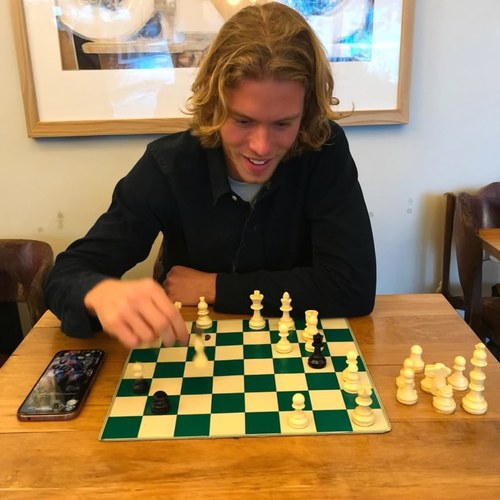
When I started taking chess seriously, I stopped trying to memorize fancy traps and instead followed one simple plan every single game, and my results climbed fast.
What I cover
1. Win the center first
The four squares in the middle of the board decide most games. I open with a central pawn, usually pushing the king pawn or the queen pawn two squares forward. That single move opens lines for my bishop and queen and stakes a claim on the busiest part of the board.
If my opponent pushes a side pawn instead, I take the center happily. Pieces that sit in the middle reach more squares, so controlling it means my army simply does more work than theirs.
A handy way I think about it: a knight stranded in a corner touches only two squares, but a knight planted near the middle touches eight. Multiply that across every piece and the side that owns the center is playing with a bigger, more flexible army even when the material is dead equal. That is why I never trade away my central presence for a stray pawn on the edge.
2. Develop every piece before you attack
The most common beginner mistake I see is chasing an early checkmate with one or two pieces. It almost never works against a calm defender, and it leaves the rest of my army napping on the back rank.
My development order
I bring out knights before bishops because knights have fewer good squares, then I place bishops where they aim at the center or the enemy king. I try to move each piece only once in the opening so I am not wasting time. A quick checklist I run in my head: both knights out, both bishops out, king safe, rooks connected.
I also keep my queen at home for the first several moves. Bringing her out early feels aggressive, but she becomes a target, and every time my opponent attacks her with a smaller piece I lose a tempo running away while they develop for free. The queen does her best work later, once my minor pieces have cleared the path and softened up the position.
One more habit that helped me: I avoid moving the same pawn twice in the opening unless I gain something concrete. Each wasted pawn push is a move I could have spent getting a piece into the game, and in a sharp opening those tempos decide who strikes first.
3. Castle early to protect your king
Castling does two jobs at once: it tucks my king behind a wall of pawns and it brings a rook toward the center where it belongs. I aim to castle within the first ten moves, almost always on the kingside since it happens faster.
Once I have castled, I avoid pushing the pawns in front of my king without a clear reason. Every pawn move there creates a hole an attacker can use.
4. Make good trades, not random ones
Each piece has a rough value: a pawn is one, a knight or bishop is three, a rook is five, and the queen is nine. Before any capture I ask whether the trade leaves me ahead in value or improves my position.
When I am happy to trade
I trade when I am ahead in material, because fewer pieces make my lead easier to convert. I also trade off my opponent's most active piece, even for one of equal value, if it kills their attack. What I avoid is grabbing a pawn with my queen and then watching it get chased around the board, losing all my time.
5. Convert your advantage in the endgame
When most pieces are off the board, the king becomes a fighter. I march it toward the center and use it to support my pawns. An extra pawn that reaches the far side becomes a new queen, and that usually ends the game.
The simplest winning plan I rely on is to push a passed pawn, the one with no enemy pawns blocking its path, while my king clears the way. Slow and steady beats flashy here.
If I am the one defending a worse endgame, I do the opposite: I bring my king toward the action to blockade the enemy pawn and I look for a way to trade off their last attacker. Many endgames that look lost are actually draws if the weaker side keeps the king active rather than shuffling it on the back rank.
Across every phase, the thread that ties this plan together is patience. I do not need a brilliant combination to win most of my games. I just keep my pieces working together, avoid hanging anything for free, and let small advantages add up until they become a decisive one.
FAQ
What is the best first move for a beginner?
Pushing either central pawn two squares is great. Both fight for the center and open lines for your pieces, so pick whichever feels comfortable and learn it well.
Should I memorize openings?
Not at first. I learned the principles in this guide instead, which got me through any opening. Memorizing long lines matters far more once you are a stronger player.
How do I stop losing pieces for free?
Before every move I check whether the square I am moving to is attacked, and after my opponent moves I scan the whole board for threats. That one habit cut my blunders dramatically.